Hank Schwartz attended JHU (circa 1958-64) and spent some time honing his skills and performing in the Baltimore area. Recordings of Hank can be found on the album “The Johns Hopkins ‘Y’ Folk Music from The Room at the Top” recorded at JHU’s Levering Hall Coffee House. The album featured tracks from local artists as well as students attending from other parts of the country.
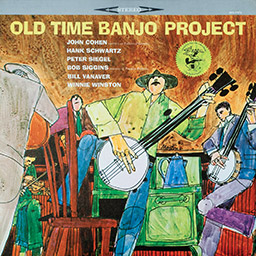
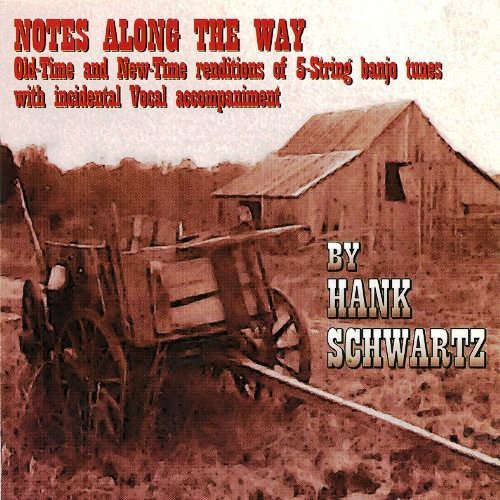
Hank’s performance at the Philadelphia Folk Festival culminated his appearance on the “Old Time Banjo Project” album (1964 Elektra Records various artists LP). His latest release “Notes Along the Way” released in 2003 consists of traditional old-time songs, ballads and instrumentals sung and played on a variety of early 5-string banjos in the traditional clawhammer/failing style.
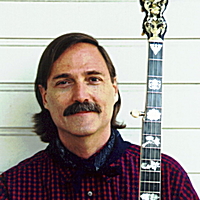
The following borrowed from CD Baby website in Hank’s own words:
“I don’t think that it’s too great an exaggeration to say that the banjo saved my life. It certainly changed it for the better, brought me many of my best friends, and is now a dear and constant companion.”
“This second life began on a trip to Europe. It was a typical late 50’s teen tour, eight weeks of intense traveling, sightseeing, great food and experiences. The male leader of this group was a mellow fellow named Woody Wachtel. He basically went along for the ride and managed to keep us all in good spirits and on track. The most remarkable thing about Woody was the ancient fretless 5-string banjo that he carried everywhere. I’d never seen a banjo before, and by the end of the trip I HAD TO HAVE ONE. Woody played in a most primitive style known as frailing which he’d learned by spending a lot of time in Allen, Kentucky with a great player named Rufus Crisp. He later brought that style to New York City where he influenced many players and kindled a great interest in old-time banjo.”
“I’ve tried to conjure up memories of that old banjo, but Woody and his banjo are long gone. The banjo died in a fire at Woody’s house in the late 60’s, and Woody died by his own hand not very long after that. I still think of him often and wish that I could tell him yet again how much he and his banjo mean to my life. He struggled with his fierce demon to the end.”
“I left for Baltimore upon my return from that memorable European trip, and the beginning of four years of college. Woody gave me the names of some good Baltimore friends of his and I soon was a regular at the old-time music gatherings in the little carriage house of Myron Edelman and Lisa Kierra. Another regular was Mike Seeger who helped me find my first banjo, a pristine Fairbanks #2 Whyte Laydie. It had belonged to the owner of a shoe store who’d played classical music on it. It was still strung with gut when I purchased it from his estate for $75. They had been asking $90 but I was a relatively poor student and they graciously took pity on me. When I asked Mike whether that was a good instrument, he figured that it would do.”
“When I started out on this long banjo path, I was a terribly self-conscious and unsocial teenager. I was too shy to date, and had spent most of my time hidden away on solitary hobbies. As I began to develop some skill and learn some tunes, I started playing outside on the Johns Hopkins campus. I also spent a lot of time in a wonderful coffeehouse called “The Flambeau”. This was the great era of coffeehouses and it sported the typical Italian iced drinks and espressos, poetry readings, chess games and folk singers. I eventually began to play at the Flambeau and actually developed a fan club and a regular gig.”
“On stage I was excited, outgoing, funny and a real performer. I tell you, folks; it made a new person of me. I went on to win the old-time banjo contest at the Philadelphia Folk Festival around 1963 and, because of that, appeared on Elektra Records’ “Old Time Banjo Project”. My short-term fame culminated in a suggestion by Elektra that I accompany Judy Collins on a road tour. I realized that this was a crossroads in my life and I fortunately opted to remain at home, a family man with a mundane occupation. And so, Hank Schwartz disappeared from the banjo scene, to only reappear in the 90’s with the advent of the WEB.”
“I’d played, on and off, these many years, but was finally inspired to take it seriously again by banjo master Reed Martin. I met a friend of Reed’s on the web who remembered me and told me that Reed, another denizen of the Baltimore scene, had been looking for me. When Reed heard that I wanted to try a Stewart banjo he mailed me one! I loved it so much that I couldn’t stop playing but decided that a Fairbanks Electric was probably the best instrument for my style of playing, something between the sound and feel of my Whyte Laydie and the Stewart. Since then I’ve become somewhat of a collector of Fairbanks history and Fairbanks banjos.”
“My style of playing is derived from the frailing style of Woody. I’ve added a lot of double thumbing, which gives my playing its own characteristic sound. I strongly believe in finding your own method and style. I enjoy the players that reproduce so well the famous styles of the past, but my music comes from my own passion for it and is only expressed by my personal style.”
“I hope that some of my listeners find inspiration in this effort to put down the results of my rebirth with Woody. I decided long ago that he wrought such a great and important change in my being that it was important to, in some way, pass it on.”
2003(CD) (indie) Notes Along The Way