By his early teens Roger Paesch was playing saxophone professionally with the Jaguars from Towson, and then one of Baltimore’s top teen center attractions Bobby Hirschmann & the Originals. Over the years he became sought after by many local groups. He got his start playing drums on TV’s “The Collegians,” and went on to become one of the area’s top saxophonists and vocalists.
In 1962 his Roger Pace Trio could be seen at Bitner’s.
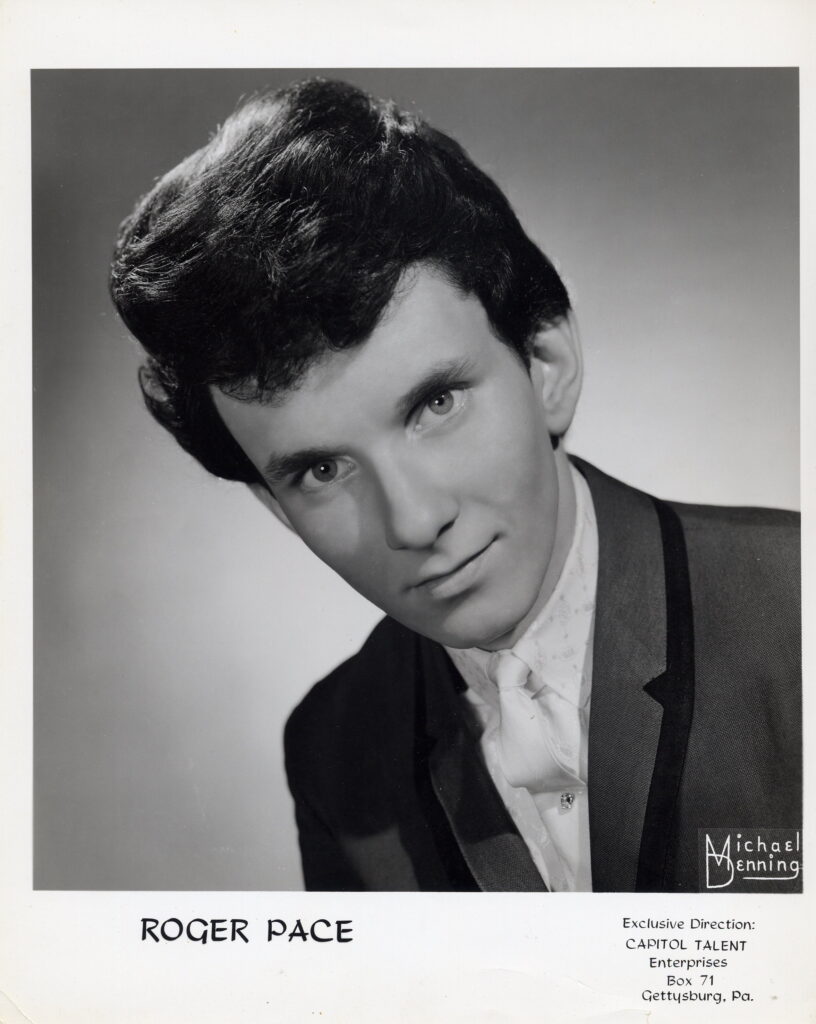
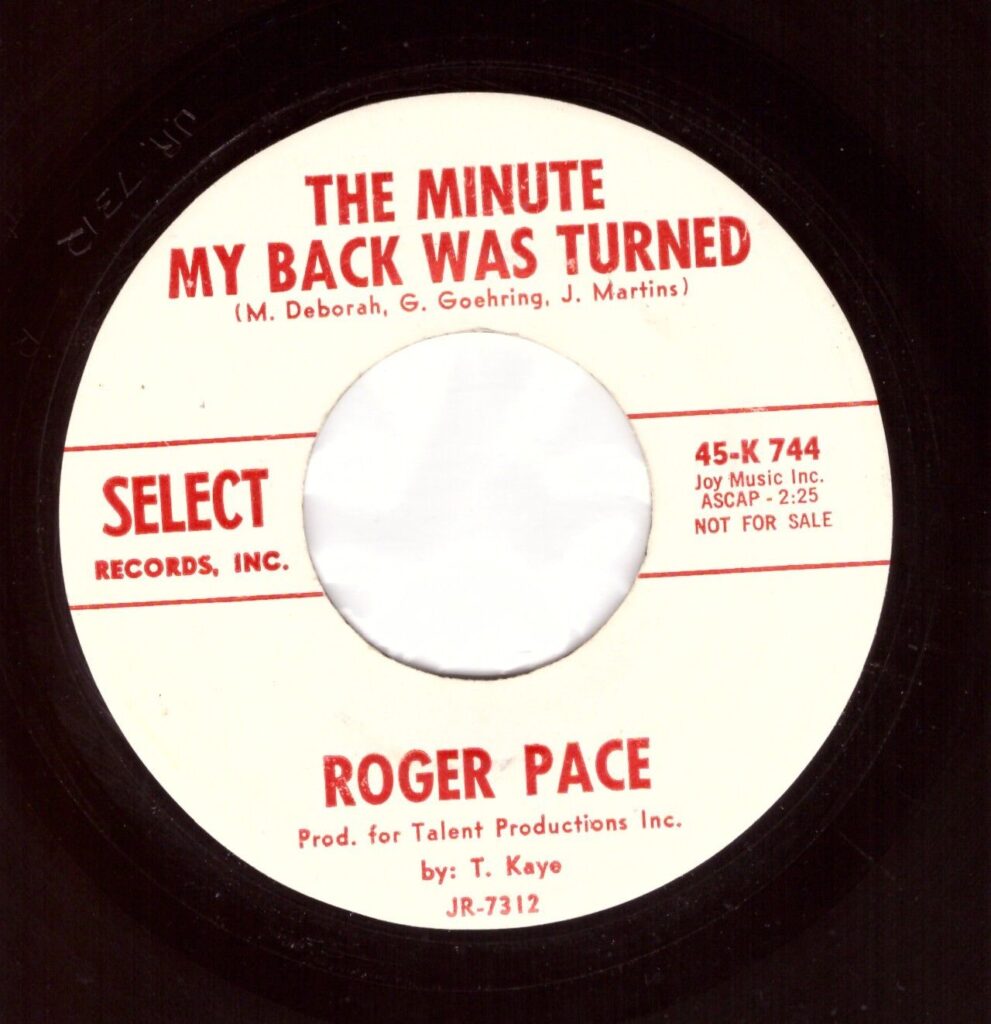
In 1964 he traveled to Philadelphia and cut the soulful teen rocker “Hey Hey My Baby’s Gone” which was released on the Select label.
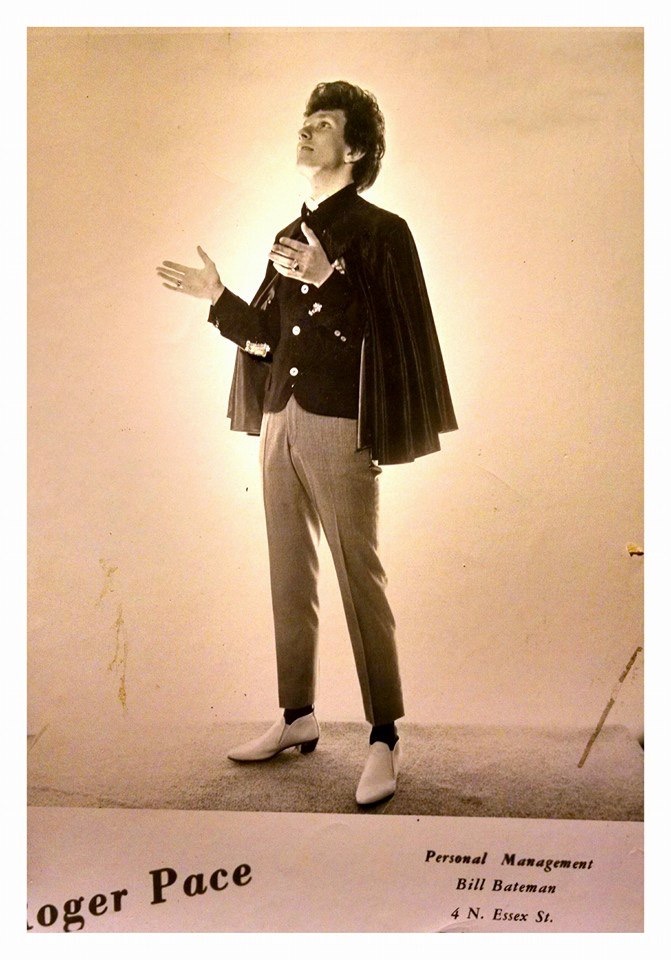
With his charismatic soulful vocal style Roger was known as “the white James Brown” with his ‘60s groups the Pacemakers, and the Tinklers. The groups played Baltimore clubs as well as tours throughout the eastern states. They were a favorite at the Intermission Lounge in Boston, and Duffy’s Tavern in Nantasket Beach, Hull, Massachusetts. Roger was also at one time a member of Ronnie Dove’s Beltones.
The Boston website www.universalhub.com/glossary/combat_zone regarding the Combat Zone, an area of red-light district clubs in Boston, Richard Kennedy wrote “In (1963) I began working at Jerold’s Men’s Shop… where the musicians came to buy their band uniforms: brocade bolero jackets, shiny high waisted pants and purple ruffled shirts, and I was the guy they came to. Being a musician myself I “understood” their stage requirements and outfitted some of the best: Roger Pace & the Pacemakers, The Hot Tamales, Dario & the Rainbows, Steve Colt & the 45s, the 7 Epics… the list goes on… To this day the greatest entertainer I have ever seen was Roger Pace… Roger Pace: ‘The white James Brown’ packed the Intermission every night for years, leaving occasionally to go back to play a club in Baltimore. Roger, who stormed the stage like an atom bomb, and continued exploding for 40 minutes 5 or six times a night. I Feel Good! Jesus, we all felt good when Roger was on stage with his skeleton of a bass player Jimmy Gregory, his great guitar player Bobby Simone, the soulful tenor of Arnie Barry and the fattest fatback you ever heard played by Denny Ward – what a group – stepping and dancing as Roger spun and split, grabbed his sax and played along, sat in on drums, danced though the Intermission out the door, the band following him as they continued singing and playing crossing Washington Steet, storming Jeromes or one of other other clubs, and coming back to the Intermission with new customers following and dancing – what a time!”
Charles, another Bostonian recalled “Roger Pace and his band played the Intermission Lounge, and they were really great. He was around as recently as the early nineties playing alto with a band called The Fantastic Cutters, but sadly, I read that he’s since passed away. I had also read that he was always in hot water with the Boston wiseguys during the sixties. Back then he had teased platinum hair and looked like Wayne Cochrane in need of a good meal. What a showman, though.”
The following quotes from unnamed sources paid homage to Roger “One of Baltimore’s finest saxophonists, Roger Pace passed away in the last month from complications from emphysema. A fine player in many idioms, especially blues and jazz, he played with many local and national artists including the late Mary Pat Hughes, Kendra Holt, and Trudy Morgal.”
“Bow your head! Pace was a revered performer, an ultimate showman, and a veteran of years of Combat Zone bars. Owners came and went; patrons came and went; the tireless Pace signed on for another tour. R&B veterans sit and sip between band sets, and when the dressing room conversation goes the way it goes, it’s usually peppered with comments and conversations like “Who’s the best you ever saw,” “worked with,” “sat in with,” etc., Roger’s name invariably pops up. A legend in the ‘60s, he was still wowing ’em in the eighties.”
“The boys may not tell you about the time some wise-guys hung Roger upside down (over and into) a toilet bowl, or the time he was nailed into his stage prop coffin at show time, but you get the drift.”
In the late ‘60s Roger performed with a D.C. group called Four Arrows and a Heart. They played locally at the Rally Club.
In addition to playing live music Roger also performed on many recording sessions including commercials and band recordings. He played on the 1970 Chuck Blevins single “Long Line Rider.”
Throughout the late ‘60s through the ‘70s Pace was a member of many popular Baltimore area Top-40, soul, and dance bands. Following is a list of bands with the years the band is known to exist (band tenures seem to overlap and it is difficult to pinpoint an exact chronology… Rogers Lodgers (’62-63), Al Knight’s Untouchables (’64-65), Roger & the Pace Makers, The Tinklers, Progressions (‘60s), Chalet (‘72-76), Satin Doll (‘75-77), Special Edition (‘76-79), Both Worlds (‘78).
In the ‘80s Roger replaced Lee Foy as saxophonist for the Main Street Gang (formerly Dion’s Streetheart Band) which became known as Bosco. He was also a member of the Fantastic Cutters (Delaware group that also featured Mary Pat Hughes), Backstreets, Crack Pack Horns, played for Bobby B (Berger), and rejoined Backstreets for whom he played until his passing in 2001 at age 56.
Pace also appears on the 1997 Tobias Hurwitz CD “Painted Sky.”
Record releases by Roger Pace include:
1964 Select 744 Hey Hey My Baby’s Gone / The Minute My Back Was Turned
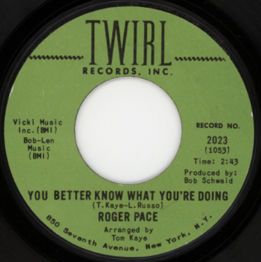
1966 Twirl 2023 You Better Know What You’re Doing / Let This Crazy World Go By