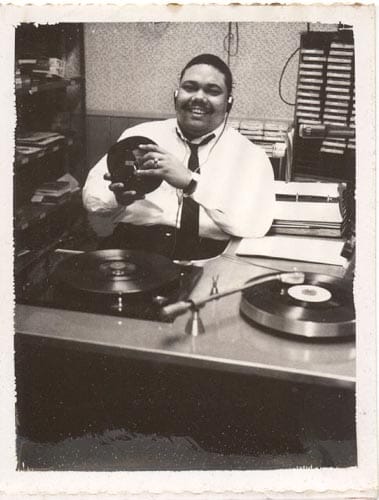
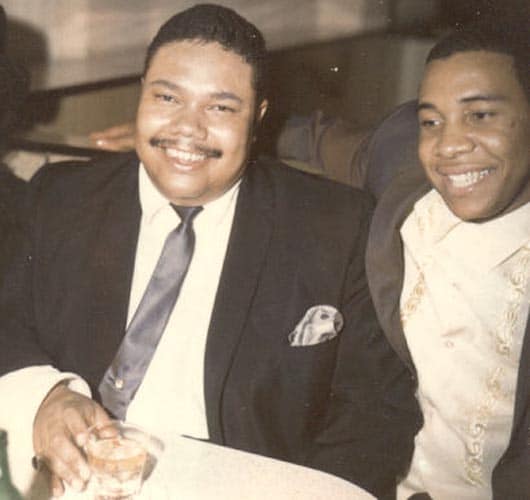
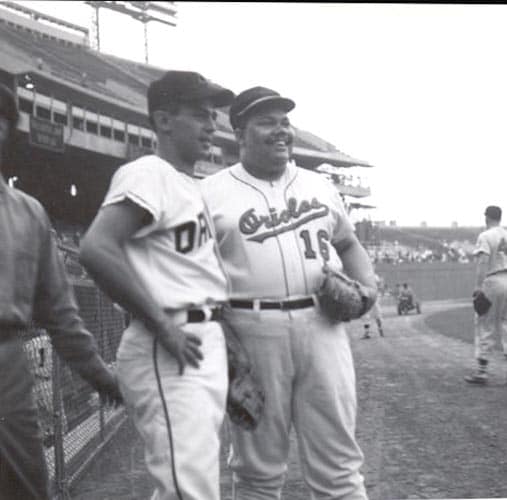
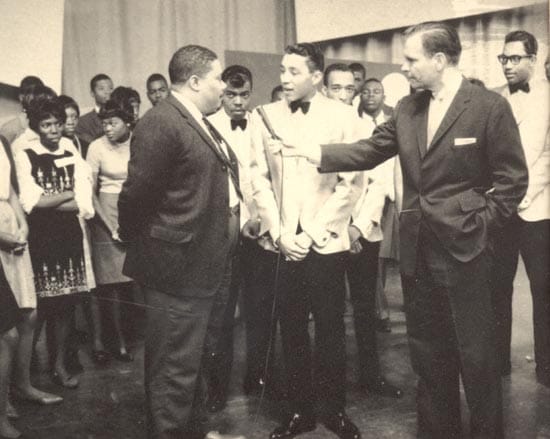
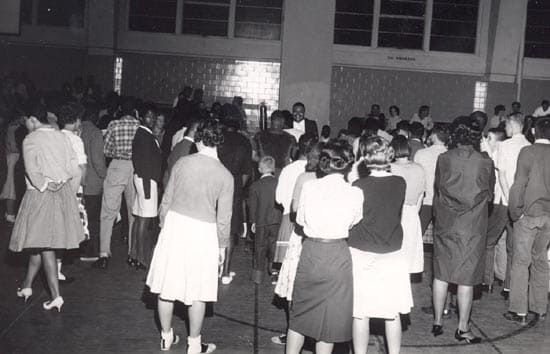
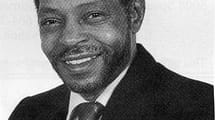
Paul Johnson attended Douglass High School. He went on to attend Morgan State, University of Pennsylvania and the University of Baltimore. With aspirations of becoming an air personality he worked as an emcee for dances at the New Albert Hall on Pennsylvania Avenue. Johnson started his broadcasting career at a radio station in Danville, Virginia where another future Baltimore legend Kelson Fisher was also working. In 1950 he was hired by WITH-AM where he could employ his quick-wit, and rapid rhythmic-jive style patter.
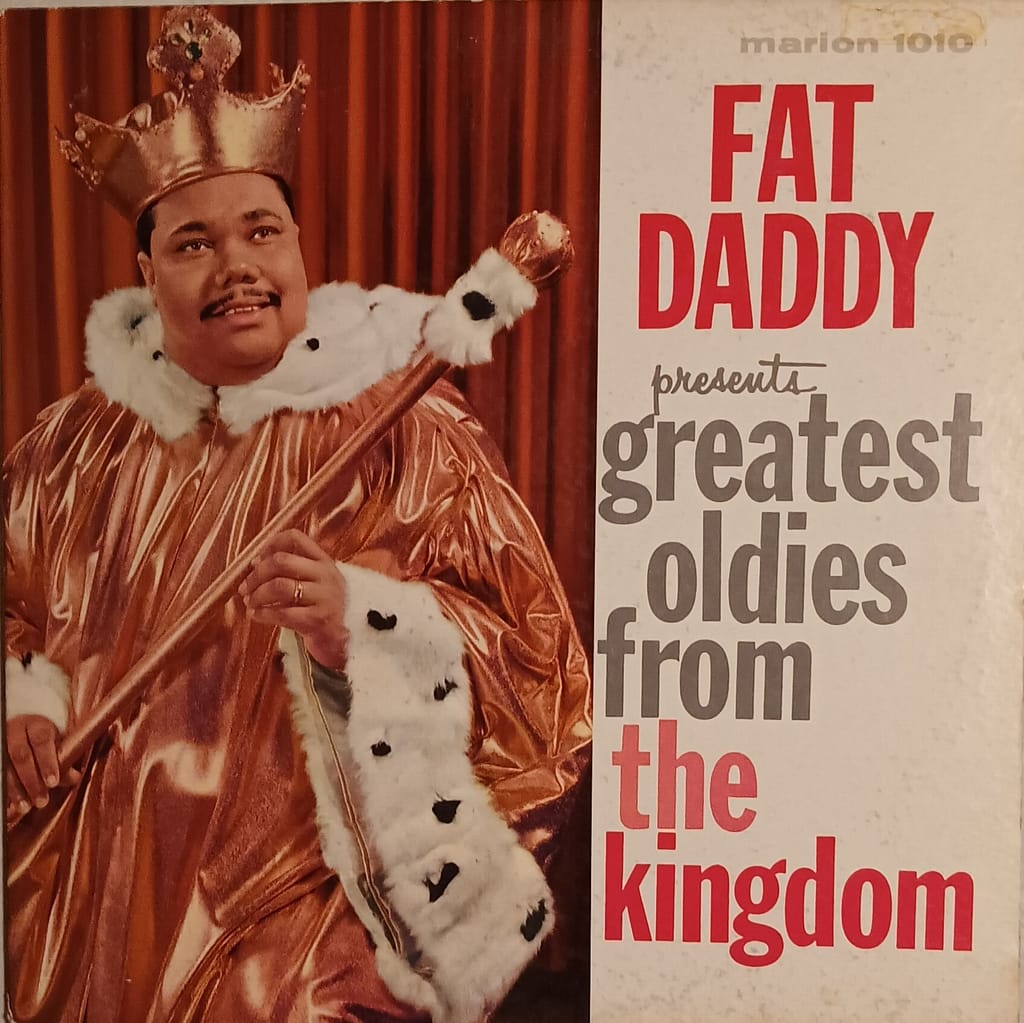
Next stop was WSID in 1961. Johnson made a royal entrance into the Royal Theater in 1962 carrying his scepter, wearing a gold-bordered red velvet robe and a crown, Fat Daddy was certainly the crown-prince of Baltimore radio and “the High Priest of Rock and Roll.”
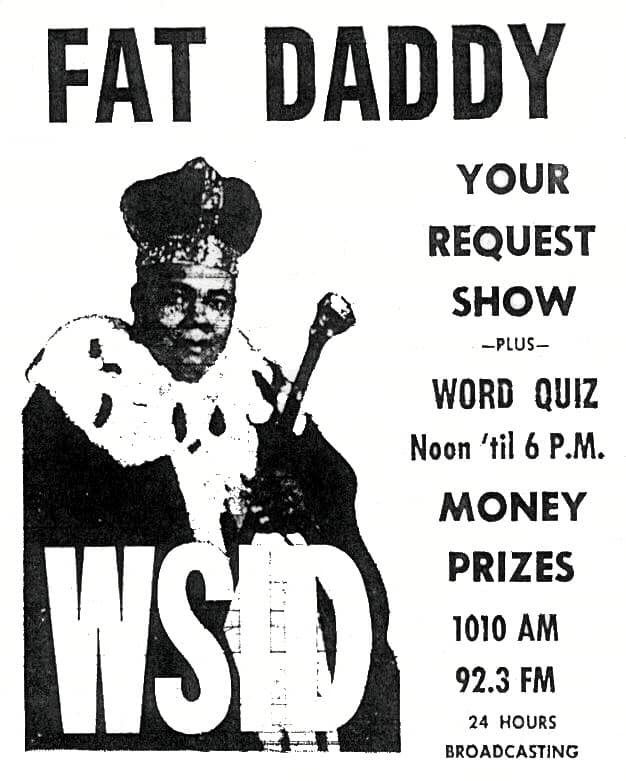
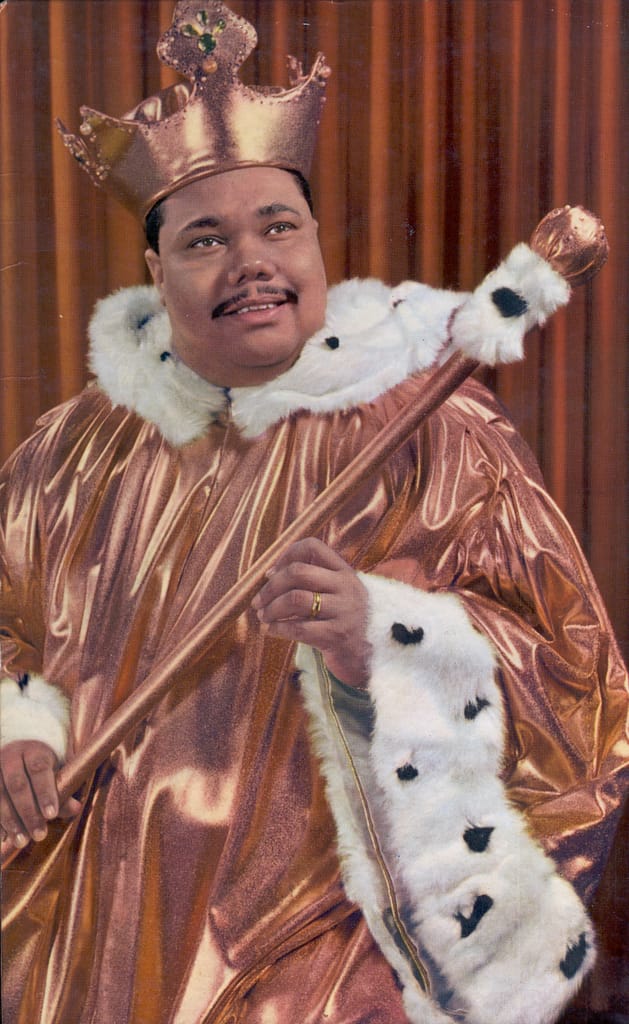
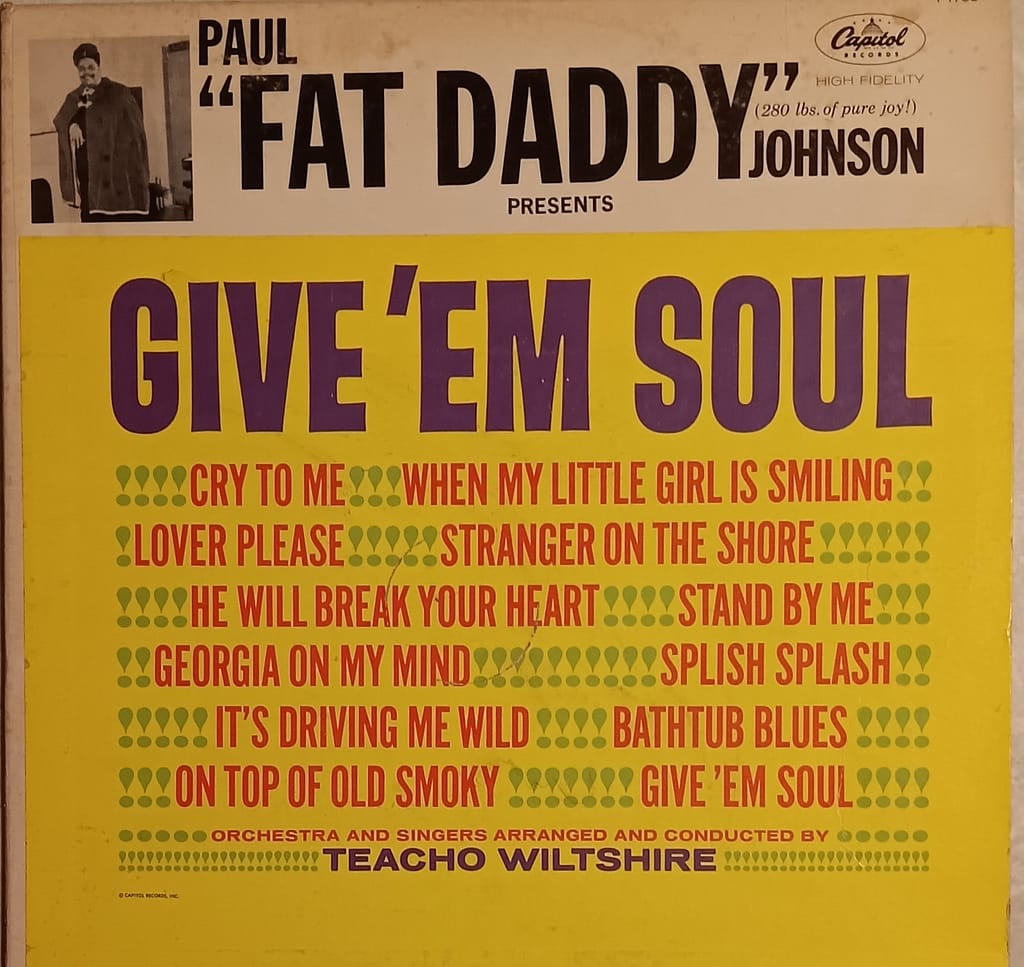
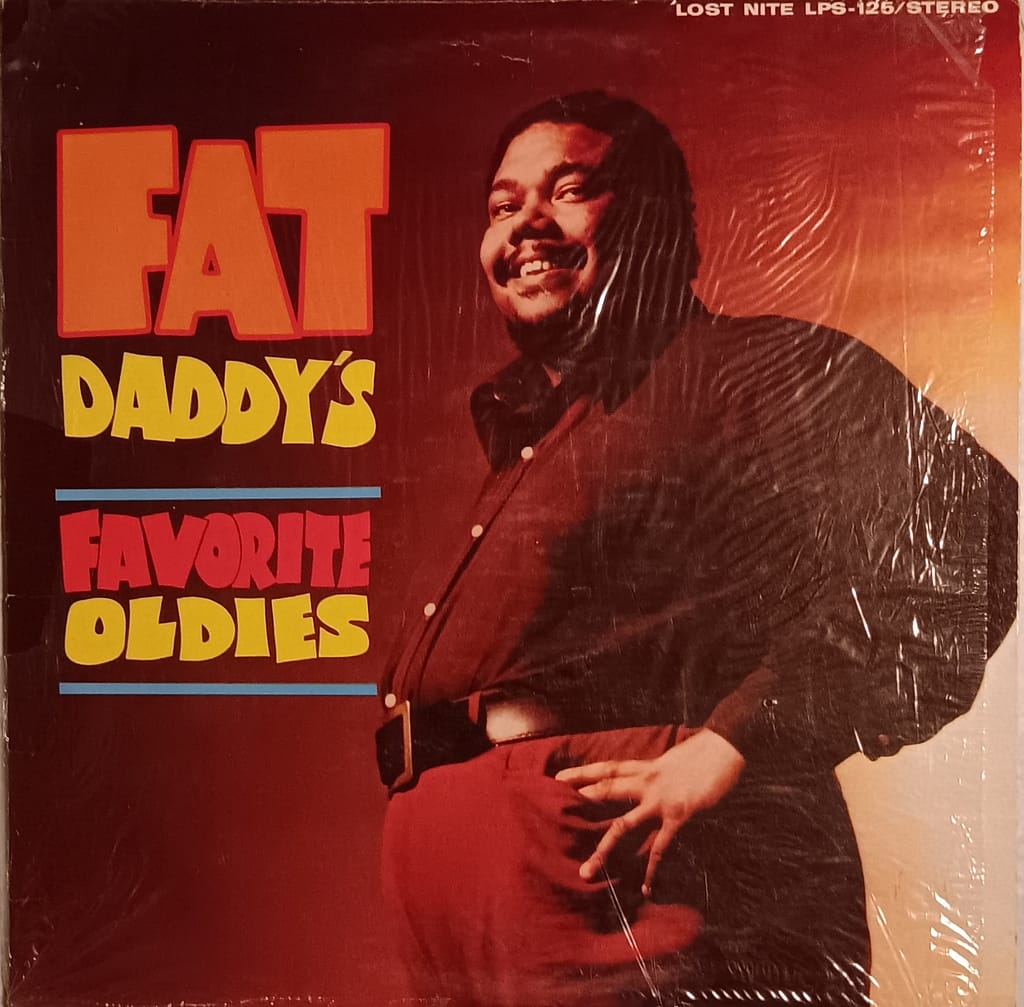
The radio celebrity also fronted his Swingin’ Organ Trio in the early ‘60s, playing on weekends at the New Twenty-Two on St. Paul and Centre Streets. A couple of radio station sponsored LPs were released featuring Fat Daddy as host of some of the top national R&B hits of the day including the LP “Fat Daddy Presents Greatest Oldies from The Kingdom” (Marion 1010). In 1962 Capitol Records released the album “Paul ‘Fat Daddy’ Johnson Presents Give ’em Soul” (Capitol 1735) featuring covers of top hits played by the Teacho Wiltshire Band and vocalists.
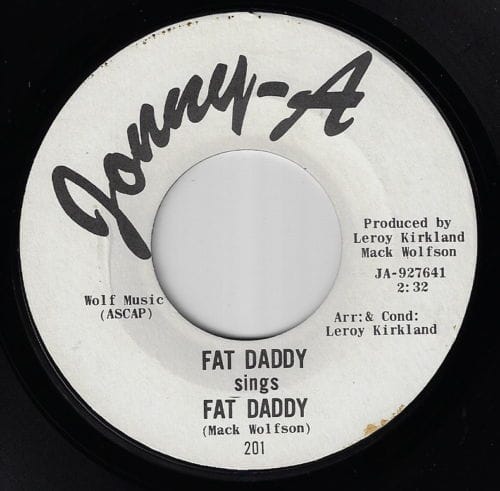
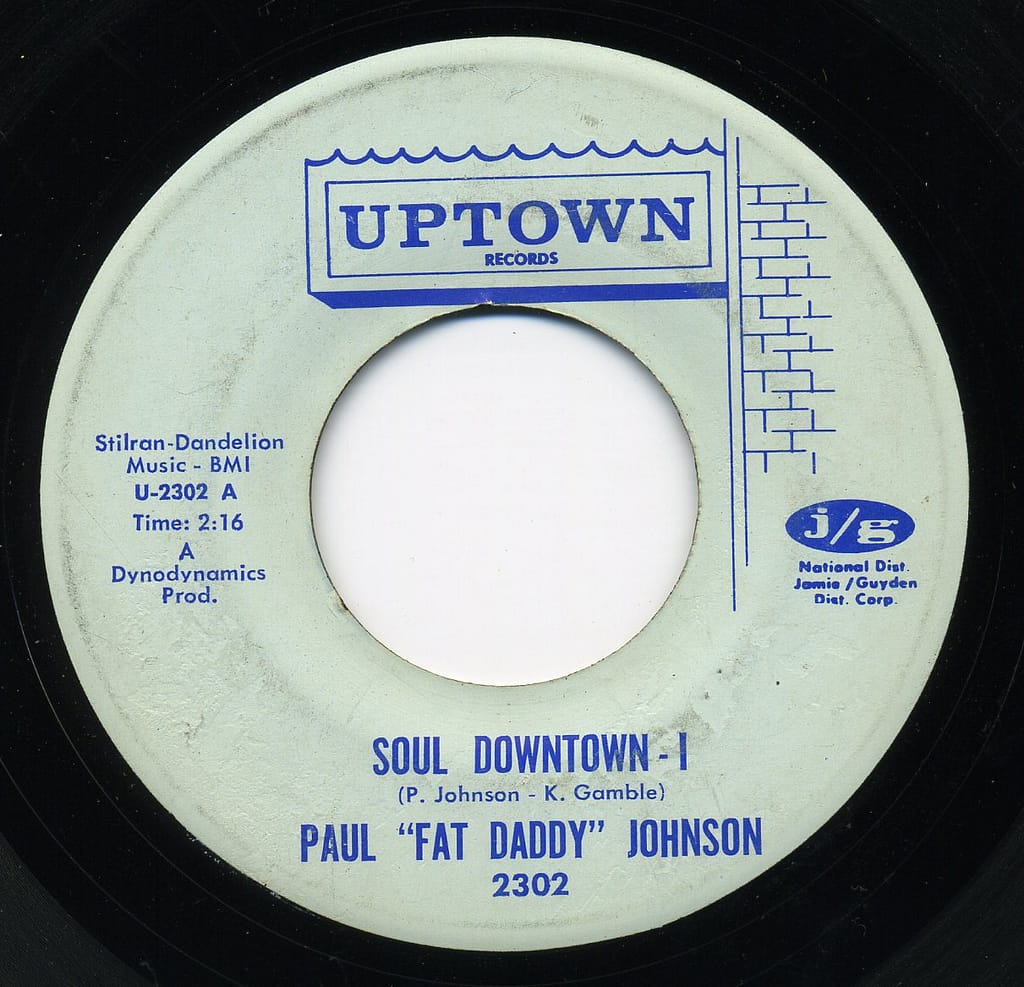
Fat Daddy recorded a popular Christmas single in 1964 single “Fat Daddy” b/w “Holiday Baby” (Jonny-A 201), and the single “Soul Downtown (parts I and II) (Uptown 2302).
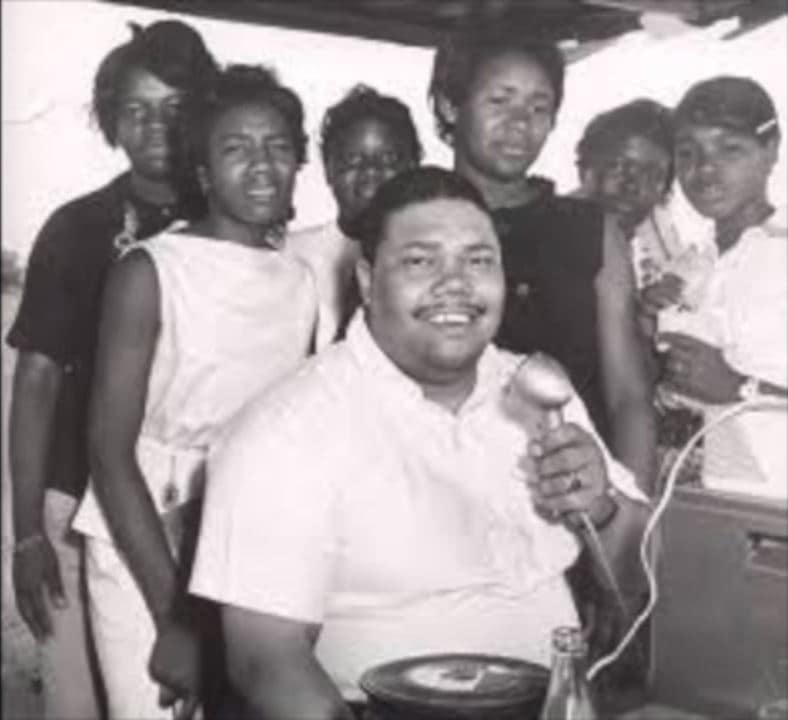
In 1964 Fat Daddy joined radio station WWIN when they made the shift from pop music to R&B. As the morning jock, Fat Daddy would start the day with his dazzling showmanship and bringing the best sounds from “The Land of Soul.” His morning show also sponsored a Soul Queen of the Week contest naming a teenage girl from each of the city high schools. It was during the 1960s that Johnson gained national recognition as being the “King of the Disc Jockeys in America.” From 1966 to 1971 he was rated annually in the national Top-5 DJs by all the major trade magazines.
After leaving Baltimore in 1971, Johnson moved on to Detroit where he served as a VP for Motown Records. He later moved to Los Angeles and did promotional work for Atlantic, and Capitol Records. He released a spoken comedy album on November 18, 1968 on the Soul-A-Rama label.
Johnson died of heart failure in 1978.
1964 Jonny-A 201 Fat Daddy / Holiday Baby
196* Uptown 2302 Soul Downtown-I / (II)
1968(LP) Soul-A-Rama Fat Daddy Looks at the World
The following is an article that appeared in the Baltimore Sun, written by Frederick N. Rasmussen of the Sun staff:
During the 1960s, Baltimoreans anywhere near a radio at 6 a.m. were summoned from their slumbers by the deep ringing of a gong followed by a chorus “like the one that accompanied Richard Burton as he walked the last mile in “The Robe,” according to the Sunday Sun Magazine.
With the stage set, an organ flared up, sounding for all the world as if it were providing the musical background for Bela Lugosi’s grand entrance down a staircase in “Dracula,” or any other RKO horror movie of the 1930s.
And then came the voice of Paul “Fat Daddy” Johnson, the “300-pound King of Soul,” with its rhythmic incantations and machine-gun-like soul jive. His voice and delivery have been described as “precise and sonorous” yet “high-pitched and pressurized.” His outrageous monologues rolled forth with a “gospel-like fervor.”
“Hear me now,” he’d hiss into the mike. “Up from the very soul of breathing. Up from the orange crates. From the ghetto through the suburban areas comes your leader of rhythm and blues, the expected one – Fat Daddy, the soul boss with the hot sauce. Built for comfort, not for speed. Everyone loves a fat man! The Fat Daddy show is guaranteed to satisfy momma. I’m gonna go way out on a limb on this one, Baltimore. Fat poppa, show stoppa.”
Ringing bells gave way to several pulses of the organ followed by the recorded voice of a young girl saying, “Lay it on me, Fat Daddy, lay it on me.”
“Fat Daddy, your king, and I’ve got soul for you. This is for all the foxes wakin’ up this morning. Here’s a soul kiss for ya, mmmmmmmmh! From the lips of the high priest, from the depth of a fat man’s soul…”
Born in 1938, Baltimore native Paul Johnson was raised near Pennsylvania Avenue, graduated from Douglass High School, where he was sports editor of the school paper, and later received a bachelor’s degree in journalism and communications from the University of Maryland, College Park.
While in college, he began working as a disc jockey at the new Albert Ballroom in the 1200 block of Pennsylvania Ave. and the Royal Theater and was influenced by the flamboyant style of another local deejay, Kelson “Chop Chop” Fisher.
After working briefly at a Danville, Va., radio station, Fat Daddy returned to Baltimore, subsequently working for radio stations WSID, WITH, and finally WINN.
Standing like a general before a battle, Fat Daddy stood before a studio console where his show took to the airwaves, somehow arising out of an organized chaos of records, commercials and his endless patter. Here’s how the Sun Magazine described the scene in a story in 1966:
“Fat Daddy bobbing rhythmically in a constant wash of sound from the speaker on the wall is manipulating this equipment with a great deal of flair, snapping cartridges into the tapecasters, slapping 45’s on the turntables, delivering finger-jabbing commercials, fiddling with a row of dials, answering the telephone, calling up for the weather report, stringing it all together with this supersonic, rhyming delivery and all the while maintaining a running conversation with whomever happens to be in the room.”
Fat Daddy and his music were popular with African-Americans but also found a wide audience among whites.
“I programmed my show for the Negro originally,” he said in the magazine article. “Rhythm and blues used to be race music. But Fat Daddy has become such a large character with everybody that now I program for white and black both. Music brings people closer together.”
In 1971, Fat Daddy left Baltimore to do national promotions for record companies, working for Motown, Atlantic, and Capitol Records. He was 40 when he died in Los Angeles in 1978. Esquire, Cashbox, and Billboard have acclaimed him as one of the top five R&B disc jockeys in America, while Record World magazine called him simply the No. 1 soul man in the nation.
A BIG Thank You to Tom Engle for the following unique air checks …